Dooble Impact — Auditing and redesigning a social impact platform's conversion flow
A site audit and full redesign for a volunteer-matching platform. Homepage and signup flow rebuilt from scratch around a clear conversion funnel.
Context
During my training at PopSchool Academy in 2022, a real entrepreneur came to the school looking for help with their platform. Dooble Impact was a volunteer-association matching service built around the UN Sustainable Development Goals — the idea was to connect people who wanted to contribute their skills with local associations that shared their values.
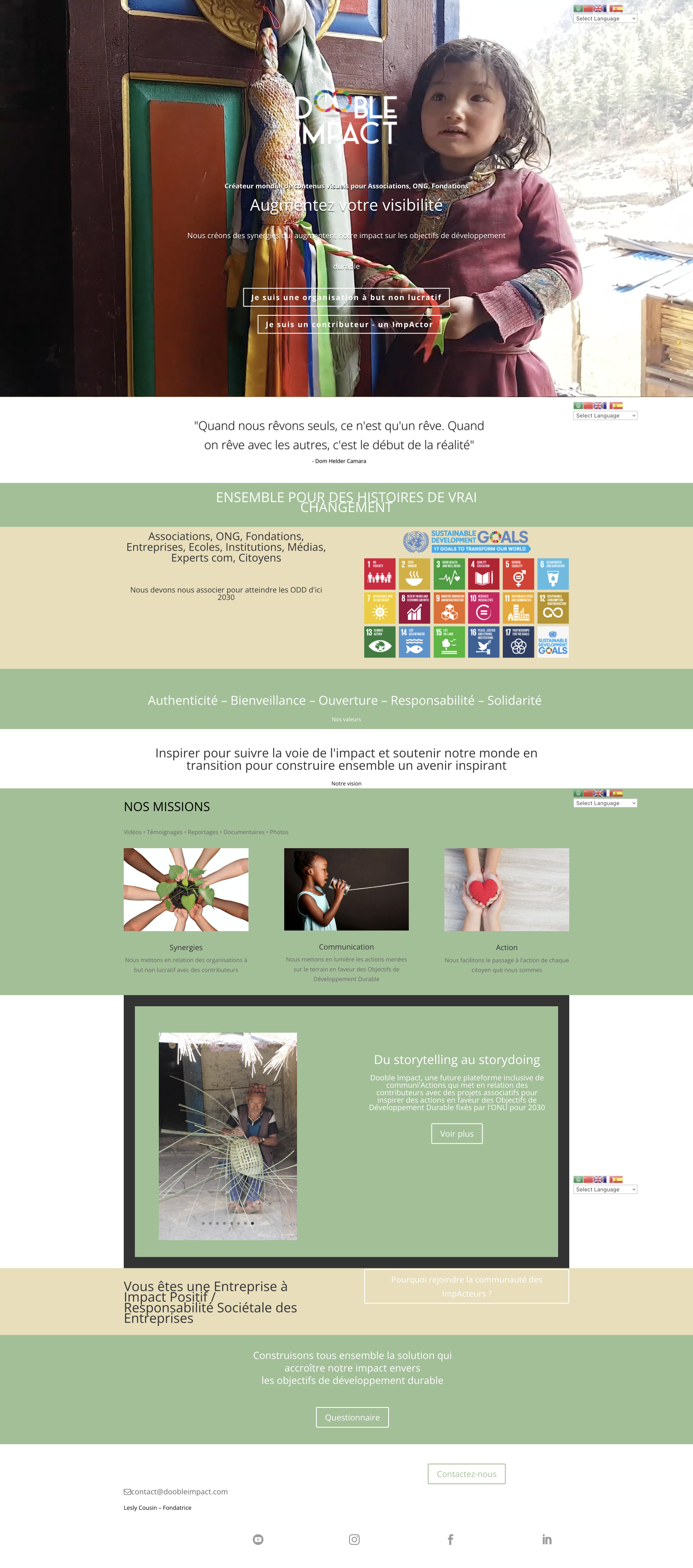
The founder already had a live website. It worked, but it felt dated and unfocused. My brief was to modernize it.
The audit
Before touching any design tool, I went through the existing site section by section and annotated every element with what it was doing — and what it wasn’t.
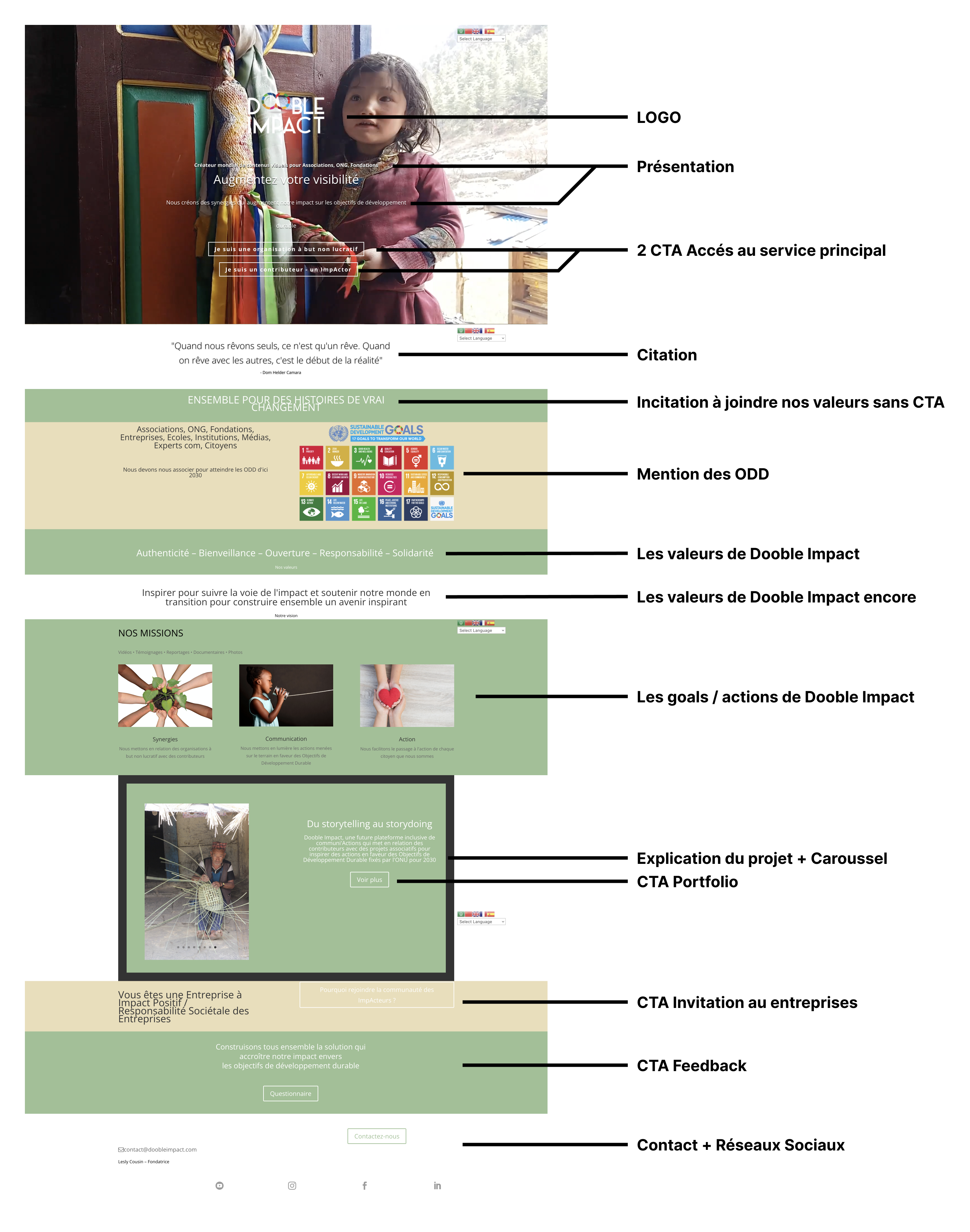
What I found:
- Values listed twice. Two separate sections restated the same values with slightly different wording. Neither added anything the other didn’t.
- Invitation without action. The site talked about joining the movement and sharing your values — but at the point where a user would be most motivated to act, there was no CTA. The text invited; the interface didn’t follow through.
- Flat information architecture. SDGs, values, missions, portfolio, a B2B pitch, a feedback section, contact info — all stacked at the same visual weight. A first-time visitor had no hierarchy to follow, no sense of what mattered most.
- No user journey. Someone landing on the homepage had no clear path from “what is this?” to “I want to participate.” The site described the project but never converted that understanding into action.
The redesign
I focused on two things: the homepage and the signup flow.
Homepage
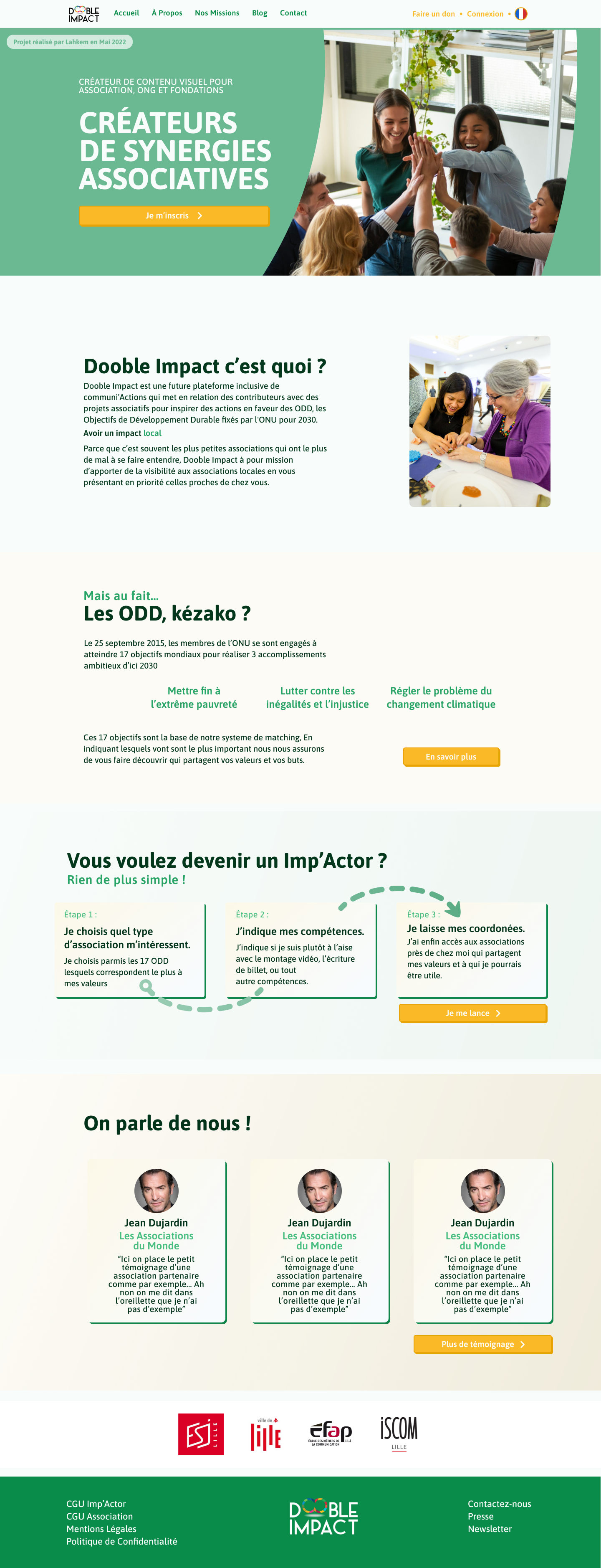
The redesigned homepage introduces a clear reading order. Instead of presenting everything at equal weight, it answers four questions in sequence:
- What is this? — A hero section with a clear value proposition and two CTAs
- What are the SDGs and why should I care? — Three concrete pillars instead of an abstract logo grid
- How do I get involved? — The “Imp’Actor” funnel: three steps explained simply, ending with a single CTA
- Is this legitimate? — Testimonials and partner logos
Each section earns the right to the next one. By the time the user reaches the signup CTA, they understand the platform, the cause, and their role in it.
The Imp’Actor funnel
The core conversion problem: how do you take someone who vaguely agrees with the SDGs and turn them into an active volunteer matched with a local association?
The original site had no answer — it described the values and hoped for the best. The redesign breaks it into three visible steps:
- Je choisis — I pick the type of association that interests me
- J’indique mes compétences — I indicate what I’m good at (video editing, writing, event organizing…)
- Je laisse mes coordonnées — I leave my contact info and get matched with nearby associations
Each step is small enough to feel effortless. The user sees the full journey before committing to step one — reducing anxiety about what they’re signing up for.
The signup flow
The three homepage steps expand into a full guided onboarding: a 4-step form flow that walks the user through selecting their values, indicating their skills, and providing their details.
Outcome
Competitive project — the client reviewed multiple proposals and selected another student’s design.
What I took from it
The audit methodology is the part that stuck with me most. Sitting with a live site and naming every element — not what it is (header, section, footer) but what it does and what it fails to do — turned out to be the most useful design skill I practiced during that training. It’s something I’ve used on every project since.
The signup funnel taught me something about progressive disclosure: showing the full journey upfront before asking the user to commit to any of it. People don’t fear complexity — they fear the unknown. A visible 3-step path feels lighter than a single “Sign up” button that leads who knows where.